




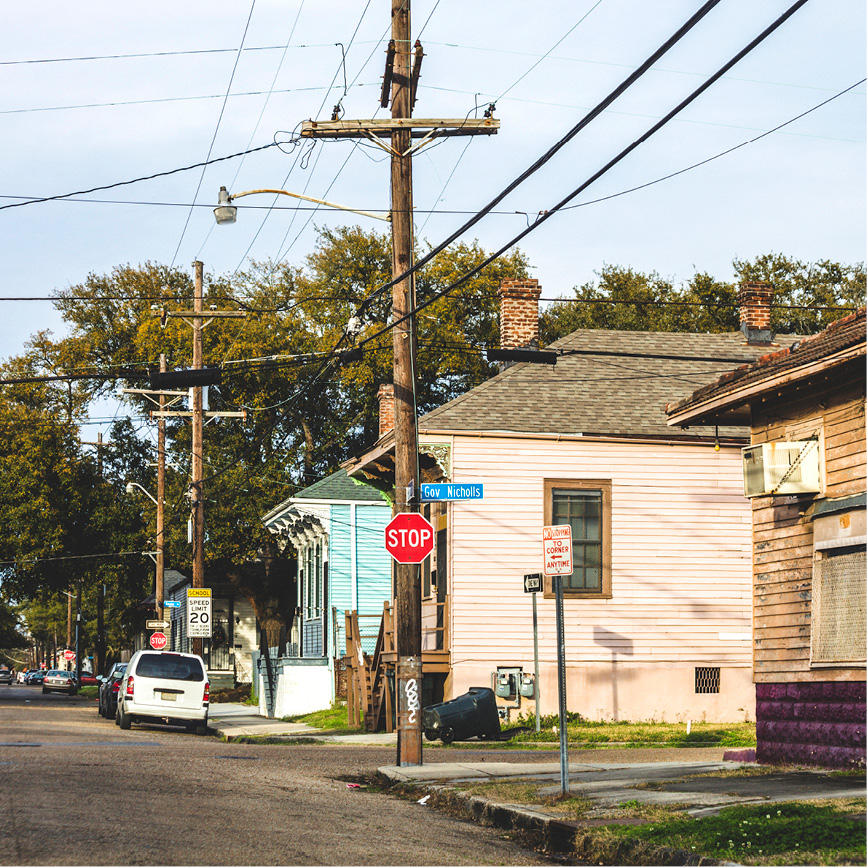


In the midst of the growing economic crisis, communities of color are hit disproportionately hard. These communities, particularly Black communities, are still recovering from previous disasters, like Hurricane Katrina and the 2008 foreclosure crisis. The health disparities that plague these communities coincide with the growing economic threat.
Policymakers’ responses to COVID-19 must account for pervasive racial and economic inequality, and must prioritize protection from debt-related abuses.
Even before COVID-19 struck, many Louisiana families were already financially vulnerable. Over half of Louisiana households were unable to make ends meet for three months if their income is interrupted. For Black households, it is more than two-thirds. Income disparities are a barrier to having a cushion of emergency savings. In Louisiana, the average income of white households is more than double that of Black households. Finally, another contributing barrier to financial insecurity is growing debt burdens, like medical and student loan debt.
Did you know?
Prior to the pandemic, over 44% of Louisiana residents had a debt in collections, higher than the national average, according to the Urban Institute. Again, following patterns of economic inequality, this burden is heavier for communities of color, where in Louisiana 58% have a debt in collection, compared to 38% of white communities.
Similar trends are found among other Deep South states. The lost jobs, shuttered businesses, and reduced incomes due to COVID-19, again all disproportionately effecting communities of color, will only exacerbate the problem.
These existing debt loads and racial disparities must be taken into account when assessing the financial relief people need at this time. These debts blunt the effectiveness of financial relief efforts provided by federal and state governments. For example, federal CARES Act stimulus payments were intended to provide relief to households in the face of the pandemic by allowing people to buy essential items and cover bills. However, data and experience show that a significant amount of these payments went towards paying on existing debt rather than essential needs. Data from the Federal Reserve show that 42% of people used it for debt payments with these rates being higher for Black and Latino people (58% and 53% respectively), than for white (38%).
For many people, stimulus relief is falling into the hands of payday lenders, who target rural neighborhoods and communities of color with their high cost, wealth-stripping products.
As just one example, between March 11 and May 1, payday lenders took over $108,000 from Hope Credit Union members across the region, and portions of people’s stimulus payments went towards previously existing payday loan debt.
Policymakers must take action now to prevent damage that will last for years to come. COVID-19 induced debt defaults will lead to evictions, foreclosures, and low credit scores, which will make it harder to secure decent housing, jobs and affordable credit long after the pandemic ends. The importance of such relief is already keenly felt. Data from the Philadelphia Federal Reserve shows that over 43% of Black and Latino people found suspensions of debt relief payments and suspension of negative credit reporting beneficial as part of COVID financial relief efforts.
People all across the Deep South are asking state officials and policy makers to respond to the times, and their actions must serve to narrow rather than widen the racial wealth gap. Addressing these debt burdens is a necessary part of the equation. Louisiana recently enacted legislation to protect stimulus payments and future government relief funds from seizure by debt collectors.
This is a helpful first step, but more protections are needed as millions remain unemployed, courts are reopening as states reopen, and relief efforts provided early in the crisis are now running out.
Debt relief and protection from debt-related abuses are needed in other Deep South states and at the federal level to ensure the economic security of people, particularly communities of color, amidst and after COVID-19.